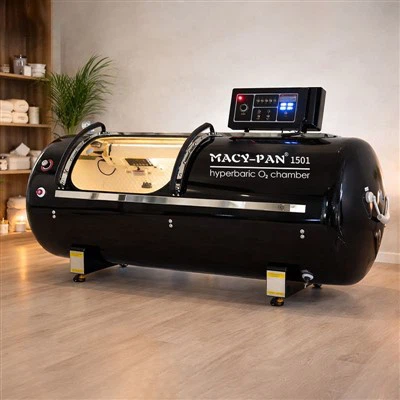
Chamber Design:
The main body of a hyperbaric oxygen chamber is a cylindrical or square sealed chamber. The chamber door uses a multi-layered airtight structure (such as an airtight door or a hydraulic door). The interior is equipped with seats, lighting, and communication equipment. The chamber walls must withstand 1.5-3 atmospheres (ATA) of pressure, and the materials used are mostly pressure-resistant and corrosion-resistant special metals or composite materials.
Oxygen Supply System:
Oxygen is delivered through masks, helmets, or through full-chamber diffusion. Single-person chambers typically use pure oxygen pressurization, while multi-person chambers use pressurized air combined with mask oxygen inhalation to ensure that patients inhale oxygen at a concentration of over 95% in a high-pressure environment, significantly increasing the dissolved oxygen content in the blood.
Safety Control System:
Includes pressure sensors, temperature and humidity regulators, fire alarm devices, and emergency pressure relief valves to ensure stable pressure and no safety hazards throughout treatment. Most chambers are equipped with transparent observation windows for real-time monitoring by medical staff.